23
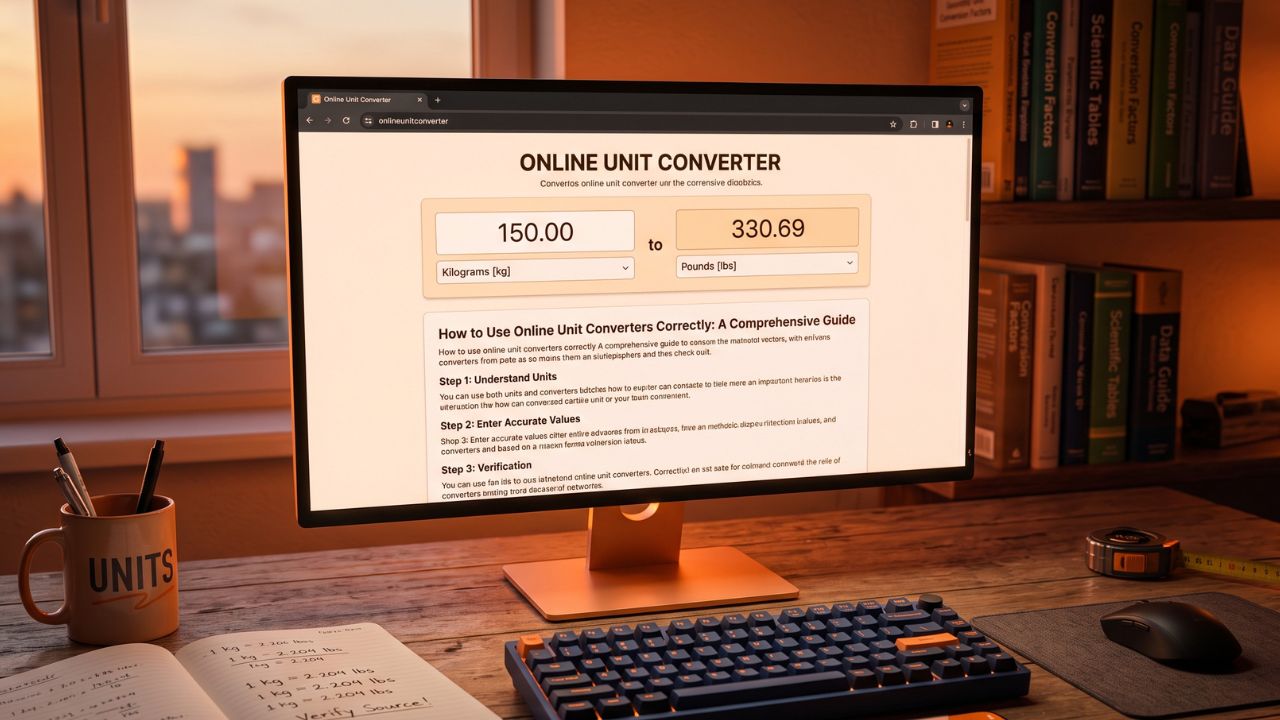
How to Use Online Unit Converters Correctly: A Comprehensive Guide
Discover the best practices for using online unit converters accurately for cooking, travel, academics, and professional tasks without making common mistakes.
Introduction to Online Unit Converters
In our increasingly interconnected world, encountering different systems of measurement is a daily reality. Whether you are trying a new recipe from an international blog, planning a road trip across borders, studying for a physics exam, or working on an engineering project, the need to convert units accurately is ubiquitous. Fortunately, online unit converters have made this process incredibly accessible. However, while these tools are convenient, using them correctly is essential to avoid errors that could lead to ruined meals, miscalculations, or even costly professional mistakes.
This comprehensive guide will walk you through the nuances of using online unit converters correctly. We will explore the common pitfalls users face, how to choose the right conversion tool for your specific needs, and practical tips for ensuring your results are always accurate.
Understanding Different Measurement Systems
Before diving into the mechanics of online converters, it is helpful to understand why we need them in the first place. The world primarily uses two main systems of measurement:
- The Metric System (International System of Units - SI): Used by the vast majority of the world, this system is base-10 and includes units like meters, grams, and liters. It is known for its logical progression and ease of scaling.
- The Imperial System and US Customary Units: Primarily used in the United States, and historically in the UK, this system includes units like inches, feet, pounds, and gallons. While familiar to many, it lacks the uniform base-10 structure of the metric system.
Because these systems are fundamentally different, converting between them requires specific mathematical formulas. Online converters handle this math for you, but knowing the context of the units you are working with is crucial.
Common Use Cases for Unit Converters
People rely on online converters for a wide variety of tasks. Here are some of the most common scenarios:
1. Culinary Arts and Baking
Baking is a science that demands precision. If an American baker wants to use a French pastry recipe, they will likely need to convert grams to ounces or Celsius to Fahrenheit. Using a reliable Weight Converter ensures that ingredients are measured accurately, preventing a collapsed cake or dense bread.
2. Travel and Transportation
When traveling internationally, you might rent a car in a country that uses kilometers instead of miles. Understanding speed limits and distances requires quick conversions. A Length Converter is indispensable for converting miles to kilometers, helping you plan travel times and avoid speeding tickets.
3. Academics and STEM Fields
Students and professionals in science, technology, engineering, and mathematics (STEM) constantly work with complex units. Whether it is converting joules to calories or pascals to atmospheres, precision is non-negotiable. Even a minor rounding error can compound into a significant miscalculation in a scientific experiment or engineering design.
4. Fitness and Health
Tracking progress in fitness often involves converting body weight (pounds to kilograms) or running distances (miles to kilometers). Consistent tracking requires consistent conversions to accurately gauge progress over time.
Best Practices for Using Online Converters
To get the most accurate and reliable results from online unit converters, follow these essential best practices:
Double-Check the Input Units
The most common mistake people make is selecting the wrong input unit. For example, confusing \"fluid ounces\" (volume) with \"ounces\" (weight) can drastically alter a recipe. Always verify that the abbreviation or full name of the unit you select matches exactly what you intend to convert.
Understand Significant Figures and Rounding
Online converters often provide results to multiple decimal places. While this level of precision is sometimes necessary, it can also be misleading. For everyday tasks, like cooking or estimating travel distance, rounding to one or two decimal places is usually sufficient. However, in scientific contexts, pay close attention to significant figures to ensure you are not implying a false level of accuracy.
Be Aware of Regional Variations
Not all units with the same name are identical. The most notorious example is the gallon. The US liquid gallon is roughly 3.785 liters, while the UK imperial gallon is about 4.546 liters. If you are using a recipe from a British website but using US measuring tools, a standard converter might mislead you unless it distinguishes between the two.
Use Specialized Converters for Specific Needs
While general converters are great for quick, everyday tasks, specialized tools often offer better interfaces and more relevant options for specific domains. For instance, when dealing with very precise physical measurements, utilizing a dedicated Length Converter or Weight Converter can provide more granular unit options (like nanometers or micrograms) than a generic \"all-in-one\" tool.
Avoiding Common Conversion Pitfalls
Even with the best tools, human error can introduce inaccuracies. Here are pitfalls to avoid:
- Typographical Errors: Entering 100 instead of 10 can ruin a calculation. Always review your input before hitting \"convert.\"
- Ignoring Context: A converter will happily tell you how many miles are in a light-year, but that doesn't mean it's a practical conversion for your commute. Ensure the conversion makes sense for your situation.
- Relying on Outdated Tools for Currency: While unit conversions (like meters to feet) are static, currency conversions fluctuate constantly. If your unit converter includes currency, make sure it uses live exchange rates; otherwise, use a dedicated financial tool.
How to Verify Conversion Accuracy
If you are working on something where precision is critical, it is wise not to blindly trust the first result you see. Here is how you can verify accuracy:
- Cross-Reference: Use two different reputable converter tools and compare the results. If they match, you can be confident in the answer.
- Do a Sanity Check: Apply basic mental math. If you know that 1 kilogram is a little over 2 pounds, and you convert 10 kilograms, your result should be slightly over 20 pounds. If the converter says 4.5 pounds, you know something went wrong.
- Learn the Basic Formulas: For frequent conversions, memorizing the basic multiplier can be faster and less error-prone than using an app. For example, multiplying miles by 1.6 to get approximate kilometers is a handy mental trick.
Conclusion
Online unit converters are powerful, time-saving tools that bridge the gap between different measurement systems worldwide. By understanding the common systems, recognizing regional variations, and applying best practices like double-checking inputs and performing sanity checks, you can ensure that your conversions are always accurate and reliable. Whether you are baking a cake, designing a bridge, or planning a trip, mastering these digital tools will make your tasks significantly smoother and more successful.
Contact
Missing something?
Feel free to request missing tools or give some feedback using our contact form.
Contact Us